


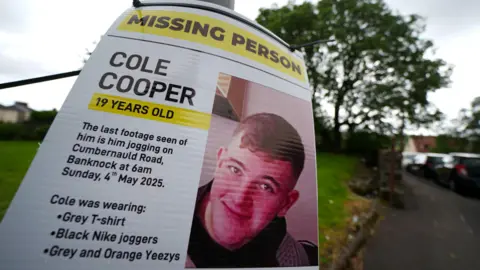
At the time 19-year-old Cole Cooper walked out into a cool May night earlier this year, not a single person would have considered he was in the final hours of his life.
He had been socializing with companions at a tavern near his dwelling in the central region of Scotland.
But hours later, his mobile was switched off - no messages, no digital activity.
Once there was no sign of him after five days, his loved ones phoned law enforcement.

Caution: This article contains disturbing information and mentions of suicide
Cole's family told that they advised police from the beginning that Cole's absence wasn't usual activity - and that he had been facing challenges with his emotional well-being.
"We clarified to the police about Cole's psychological condition. Even though Cole had not been confirmed to have clinical depression or anything like that, he did face difficulties," said his mother.
"And they nonetheless did not put Cole as a serious risk.
"He's at no time fled... police have at no point been engaged in my son's life until the moment he went missing."

The police at first deemed Cole to be intermediate risk after conducting an assessment and talking to loved ones and acquaintances.
They said Cole often alternated between locations and that it was not rare for him to be out of touch with his relatives for periods of time.
Cole's loved ones believed they had few alternatives but to conduct their own search and make their own search request.
His aunt, Aimee, said: "We just decided we're going to take charge when they're not paying attention to us."
They employed online platforms, writing one simple update: "Has somebody seen Cole?"
"The minute that it went on there, it started to kind of spiral," Aimee said.
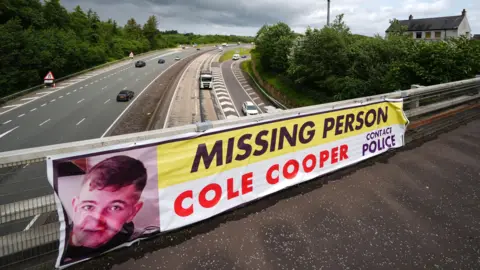
Cole's situation began circulating across the Scottish region and elsewhere. His face was on numerous social media videos, social media stories and online announcements.
The household set up a specific platform, and possible sightings and data were distributed digitally between many citizens.
His aunt said they obtained hundreds of messages from people who believed they had spotted Cole.
The loved ones coordinated search teams, which involved up to 300 people at moments in the advanced periods of their search.
The disappearance had surprised the local population in the area, the former mining village on the edges of the Forth-Clyde canal near to where Cole dwelled. Community members searched the area as they helped with the investigation.
The household also began to carry out their own door-to-door inquiries, asking inhabitants to review their monitoring devices.

"It's rather unfortunate that it arrived at a juncture where we were being forced to resort to that," his aunt said.
"Rather than you focusing on your sorrow and your distress and your anxiety for that young man, you're now in a different role."
Police Scotland says the relatives had indicated a wish to carry out their own investigations and appeals, which they were permitted to do.
"We guided them on this. However, at no time did law enforcement solicit or encourage the relatives to direct the search or supply information," a spokesperson said.
The police had also been looking for Cole.
A week after he was reported missing, they published their first public appeal - then they increased his risk level from moderate to elevated.
Recovery animal search teams and unmanned aircraft were utilized, as well as the police helicopter and divers.
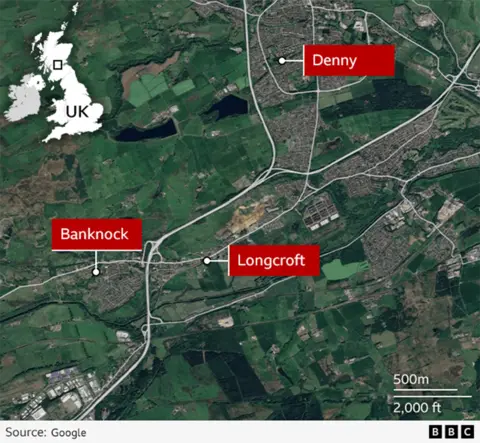
The family assembled the last hours of Cole's life and created a timeline of where the young man had traveled, seeking clues.
They found recordings of him from shortly after he exited the tavern in Denny, in Stirlingshire, on the specific night.
He was recorded on video proceeding to a private event, then later a doorbell camera picked him up moving between his dad's house, even though he didn't enter.
The family got CCTV footage from a vehicle service center which recorded Cole as he walked along the primary road at Longcroft, hesitating near a public transport point.
At 06:00,


